
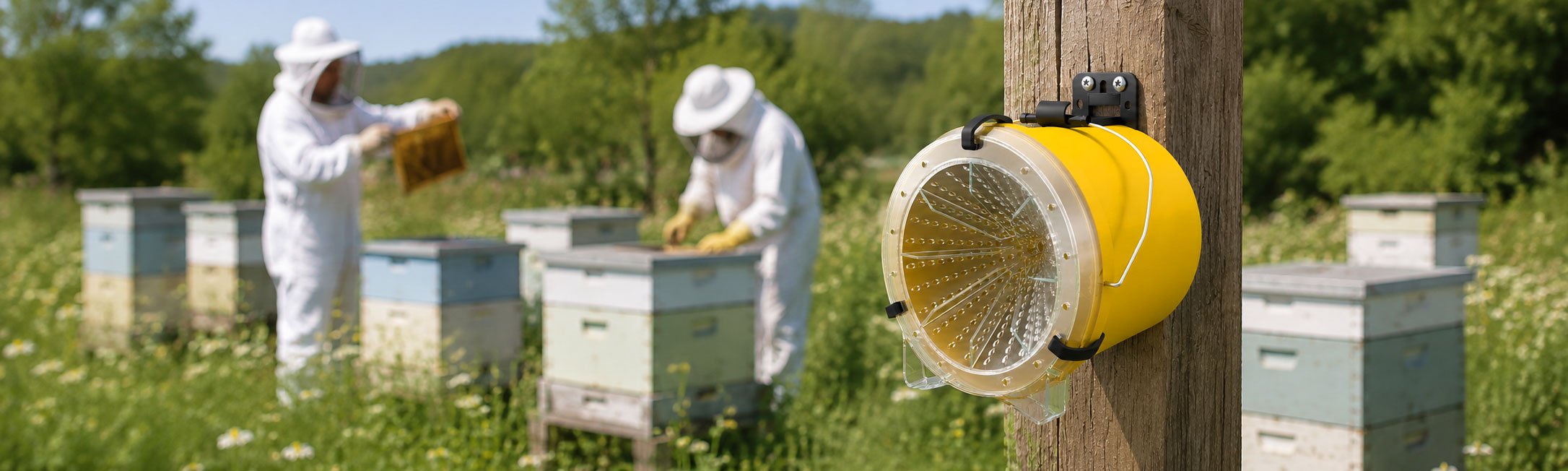

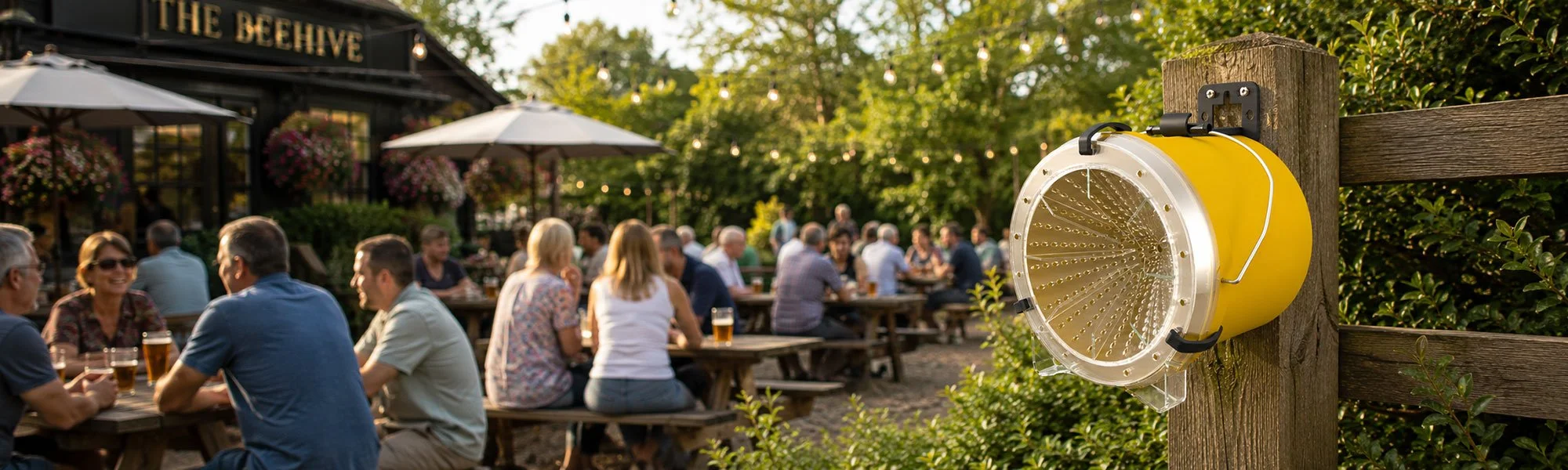

FOR BEEKEEPERS / HOMEOWNERS / OUTDOOR HOSPITALITY / CAMPSITES / ZOOS / PEST CONTROL
Trap-X® Wasp is a HIGH CAPACITY professional grade wasp trap engineered to reduce wasp pressure around apiaries, gardens, outdoor dining areas and commercial premises.
Developed in the UK and refined through extensive field testing, Trap-X® Wasp combines intelligent airflow management, guided entry geometry and anti escape technology to deliver exceptional trapping performance throughout the wasp season.
Unlike conventional wasp traps, Trap-X® Wasp has been purpose designed from the ground up to maximise capture rates while offering improved selectivity.
The large 5 litre capacity allows the trap to operate for longer periods with fewer interruptions. This reduces the need for frequent emptying and maintenance, making it especially practical during periods of peak wasp activity when trapping demand is at its highest.
Wasps entering the TRAP-X® Wasp, using the Bait Pod™ and VespaLure® attractant.
HOW IT WORKS
TRAP-X® WASP TESTED & PROVEN
Trap-X® Wasp brings together scientific expertise and practical field application to deliver a robust, high-performance trapping solution. Rigorously tested under real-world conditions, it provides a dependable, no-nonsense approach for capturing wasps where they create the most disruption.
Developed from the proven performance of Trap-X® Wasp, this wasp-specific version builds on the same core principles of guided entry, secure containment and practical outdoor use. Its 5 litre capacity supports extended deployment, while the anti-escape elbow helps keep wasps contained once inside.
Simple to set up, durable in use and designed with responsible trapping in mind, Trap-X® Wasp offers a practical solution for managing wasp activity throughout the season.
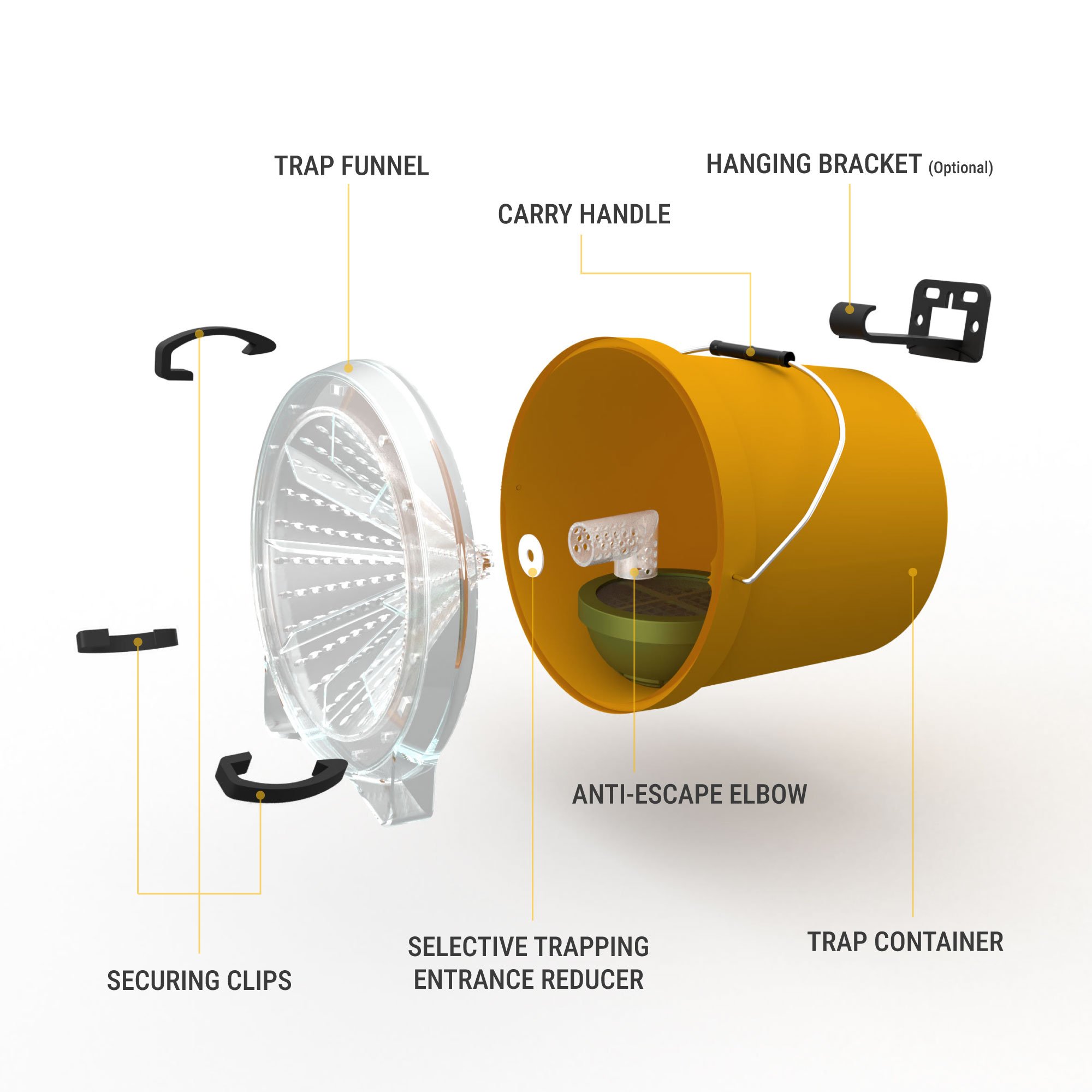
TRAP-X® WASP COMPONENTS
Main trap container
5 litre capacity trap body for outdoor use and extended deployment.
Trap entry funnel
Unquely designed trap funnel directs wasps into the trap chamber.
Anti-escape elbow
Internal elbow stops wasps returning to the entrance once inside.
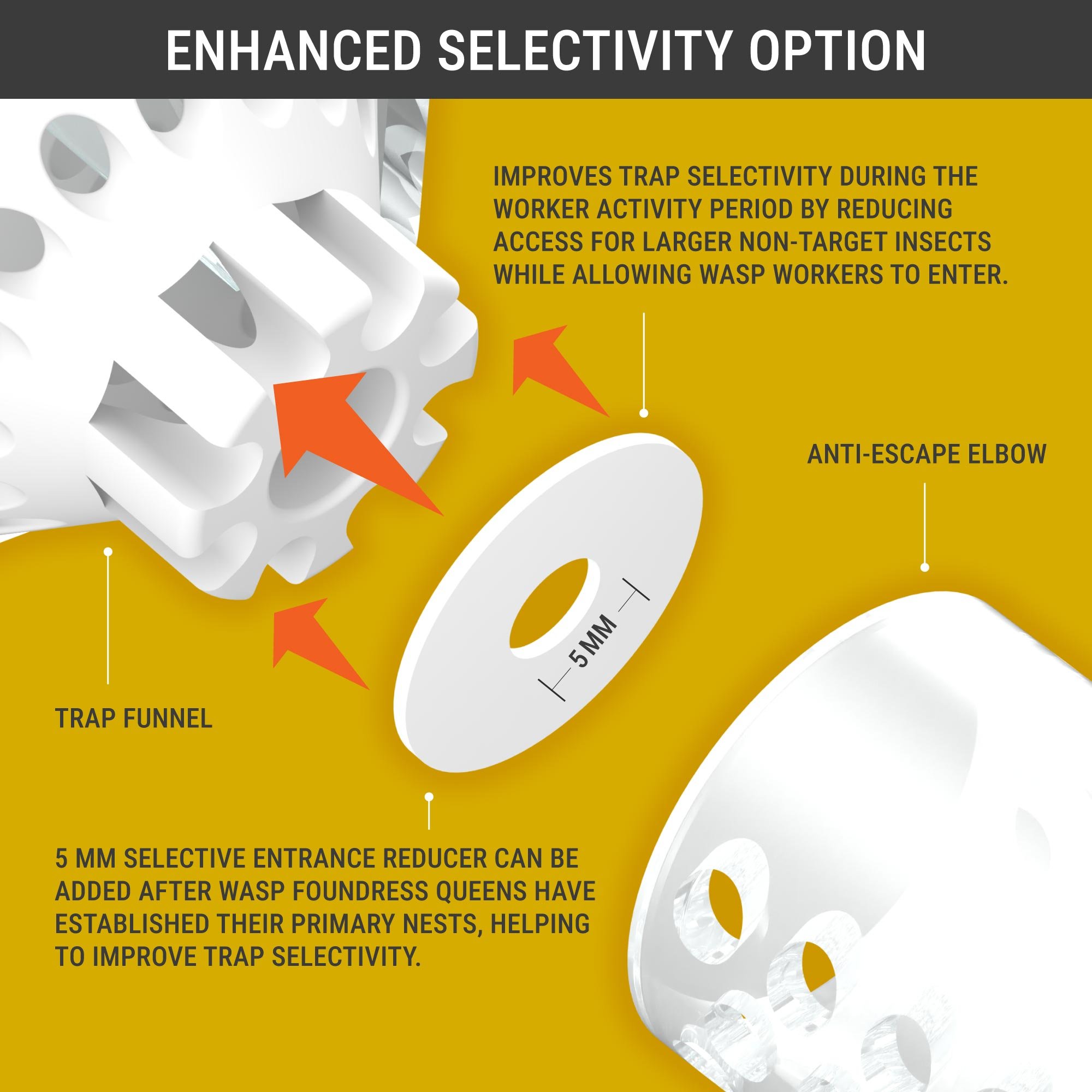
5 mm entrance reducer
Entrace reducer that can be fitted to limit entry size and reduce larger non-target insects.
Hanging point
Allows the trap to be suspended from a suitable fixing point.
Hanging bracket (optional)
Allows the trap to be fixed to a post, fence or wall.
KEY FEATURES
ANTI-ESCAPE ELBOW
Trap-X® Wasp is fitted with a specially engineered anti-escape elbow to help keep wasps securely contained. Once inside, the design disrupts their ability to find the exit, making escape difficult and improving trapping performance.
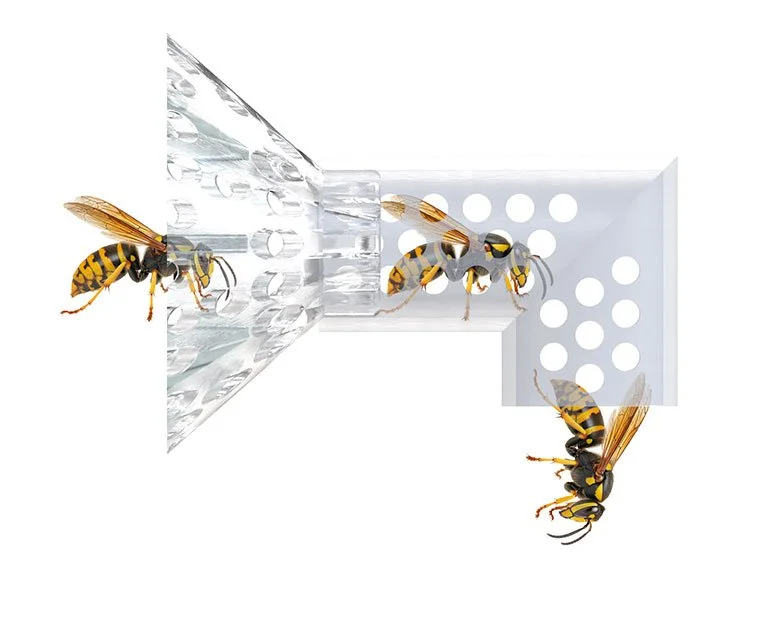
Entering The Trap
Wasps are drawn into the trap through the funnel entrance, which guides them downward through the anti-escape elbow, progressing without hesitation towards the bait source.
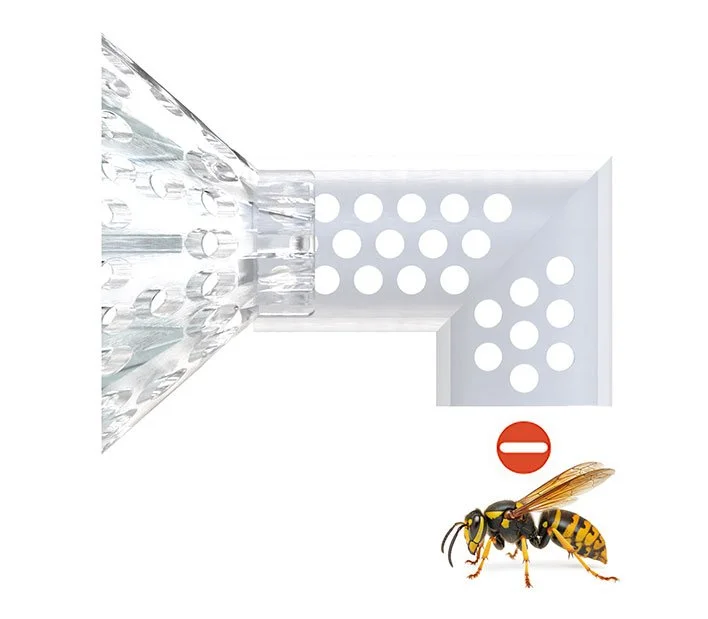
No Escape!
The unique design of the anti-escape elbow, combined with the natural behavioural tendencies of wasps, ensures that escape attempts through the elbow attachment are exceedingly rare.
BYCATCH FRIENDLY
RESPONSIBLE TRAPPING
TRAP-X® Wasp includes dedicated escape routes that allow smaller insects to escape from the trap. This helps reduce unnecessary bycatch while keeping the trap focused on the efficient capture and containment of wasps.
This bycatch-conscious design supports responsible trapping without compromising performance, giving smaller non-target insects a clear way out.
Responsible trapping
TRAP-X® Wasp has been designed with a clear recognition of the vital role beneficial insects and pollinators play in supporting biodiversity. Rather than relying on indiscriminate trapping, TRAP-X® Wasp takes a more selective approach, balancing effective wasp capture with the need to reduce unnecessary bycatch.
Ecological balance
Non-target insects, including smaller pollinators, natural pest controllers and decomposers, are essential to healthy ecosystems. Accidentally trapping these insects can disrupt natural balance and have a negative impact on biodiversity.
Beneficial insects
Bycatch can include important species that help support pollination and control pest populations. TRAP-X® Wasp includes escape routes that allow smaller insects to leave the trap, helping to reduce unwanted captures, while maintaining strong trapping performance.

Escape Routes
Beneficial insects can escape through the outer escape-hole ring as well as through the series of funnel bait-vapour vent holes.
PLACEMENT & DEPLOYMENT
MANAGING WASP ACTIVITY
Managing Wasp Activity Around Apiaries
Queen wasps emerge from hibernation at varying times depending on temperature and their hibernation site, with emergence sometimes differing by over a month. Typically, the first queens are seen around late March, marking the start of a new season.
Early Opportunities - Managing Emerging Queens
Queens establishing nests present an excellent opportunity for prevention. By placing traps around the perimeter of the apiary or in nearby areas, you can significantly reduce the chance of wasps settling close to your colonies.
Worker Activity in June - Staying Ahead
By June, nests begin producing workers. While these early workers are small and forage close to the nest, setting traps strategically now ensures you stay ahead of potential challenges.
Worker Activity in July - Building Resilience
By July, most nests will produce larger, full-sized workers. As these workers increase in number and begin to forage further afield, focusing your efforts on well-placed traps can protect your apiary and minimise losses.
Effective Trap Placement: Perimeter Positioning
Placing traps around the site perimeter is an excellent first line of defence, intercepting wasps before they reach the hives. For areas with tall vegetation, raising traps higher can improve effectiveness and ensure better coverage.
Proximity to Hives
If wasps begin hawking hives, moving traps closer to the hives can offer direct protection.
Flexibility and Adaptation
Each apiary is unique, with different layouts, terrain, and vegetation. Adjusting trap placement regularly or creating a circle of traps around the apiary can adapt to changing conditions like wind direction and improve overall effectiveness.
Wasps Flight Patterns
Wasps scout for food close to the ground, staying near where food is available. This makes traps positioned at low to moderate heights particularly effective.