
Wasps at the hive: Has 2026 been tougher for beekeepers across the UK and Europe?
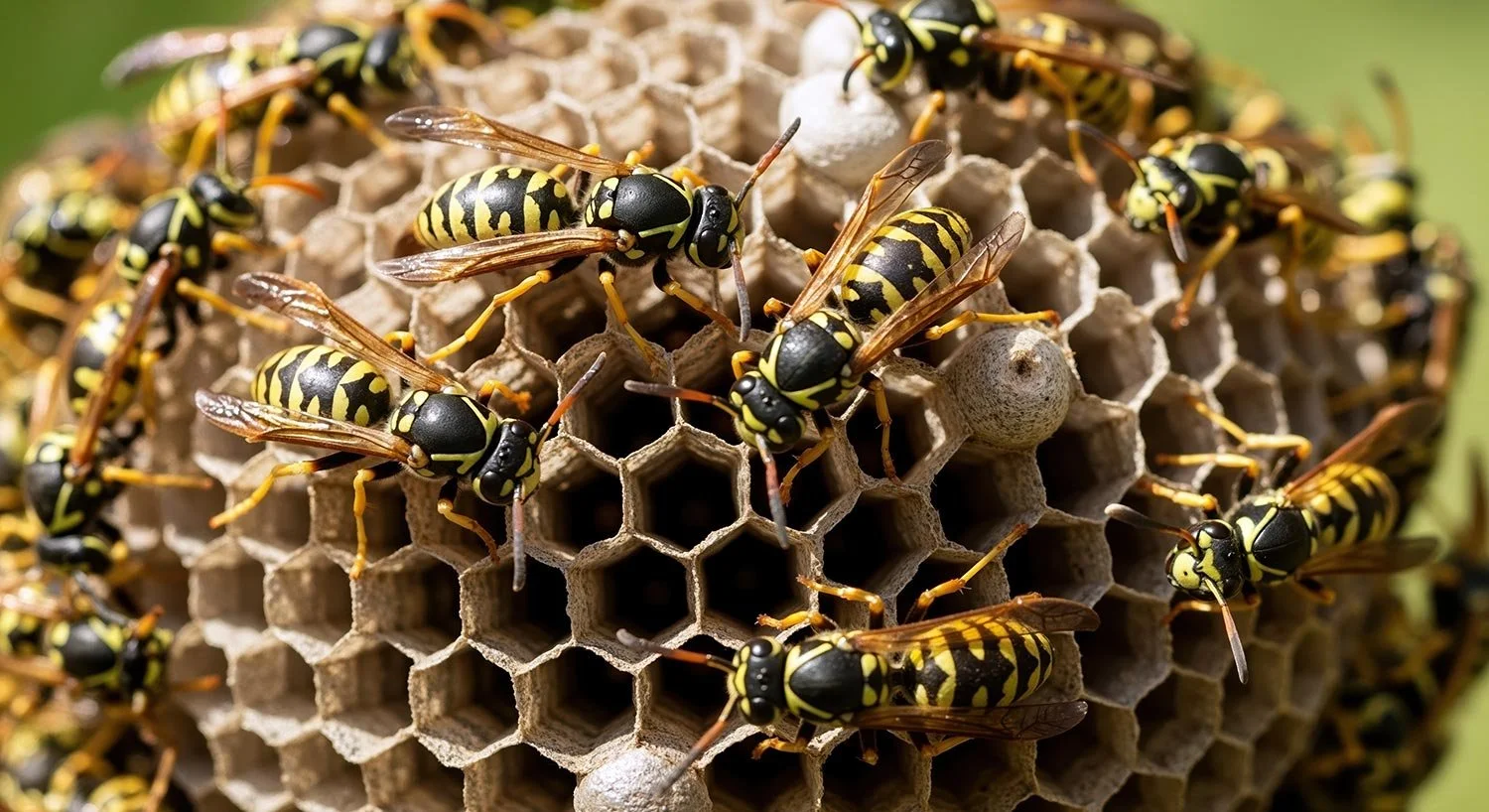
For a beekeeper, a wasp hovering outside a hive can change the mood of an otherwise peaceful afternoon. A few exploratory visits may come to nothing. Persistent attempts to enter a vulnerable colony deserve closer attention.
But have wasps been worse in 2026 than in 2025? Across the UK and continental Europe, the evidence suggests a mixed picture. Some areas have reported quieter conditions, while others have seen increasing activity around colonies. Local experience matters far more than headlines announcing a widespread “wasp invasion”.
Looking back at the 2025 wasp season
The Netherlands illustrates how busy 2025 became. The Dutch Wasp Foundation reported more than 2,550 requests for help with wasps or nests, over four times its 2024 total. However, it attributed that increase to both a stronger wasp season and greater awareness of its services. More enquiries do not necessarily mean a matching increase in wasp numbers.
In the UK, the Scottish Government’s review of the 2025 beekeeping season recorded increased wasp presence alongside strong colony development, swarming and summer heat. For some beekeepers, wasps added to an already demanding season.
2026: A mixed picture across the UK and Europe
By summer 2026, experiences were less consistent. Professor Seirian Sumner at University College London reported that her team was struggling to find enough wasps for experiments. Pest controllers she had spoken to also described fewer requests to remove nests. She emphasised that these were anecdotal observations, rather than national population measurements.
Yet a July report from Shipston Beekeepers described increasing wasp activity around colonies. Both experiences can be real. A quieter season elsewhere offers little reassurance when your own weaker colonies are attracting persistent attention.
Reports from continental Europe also challenge the idea that 2026 has been uniformly worse. In July, NABU wasp specialist Rainer Hanke expected fewer wasps in the German state of Thuringia than in 2025, following an unfavourable start to nest development. That was a regional expectation, not a conclusion about Europe as a whole.
How weather and food influence wasp pressure
Weather helps explain these differences. A queen founding a nest must initially build, forage and raise her first workers alone. Conditions during this vulnerable stage can determine whether her colony develops successfully. Later warmth may encourage activity, while extreme heat, drought and disrupted food supplies can create other pressures.
Those conditions vary widely across Europe. Beekeepers in southern Spain, northern France and the English Midlands may face very different combinations of weather, forage and colony strength. Wasp abundance, nuisance around people and damage to honey bee colonies are also different measures.
Understanding what wasps are collecting helps explain their interest in hives. Workers gather protein to feed developing larvae, while adults need sugary food for energy throughout the season. As colony needs and food availability change, honey and syrup can become attractive resources.
Protecting vulnerable colonies
The practical response begins with the bees. A strong colony with a well-defended entrance may cope with occasional visitors, while a small, queenless or weakened colony can be more vulnerable.
Reduce entrances to a size the bees can defend while maintaining adequate ventilation. Check queen status and food reserves, use internal feeders, and keep syrup spills, exposed honey and uncovered comb out of the apiary.
Watch carefully to identify the raiders. Honey bees from other colonies can rob hives too. Where persistent wasp attacks continue, suitable entrance guards or screens may help. Targeted trapping can also form part of a wider response where appropriate and permitted locally. Check traps regularly and judge success by changes in pressure at the hive.
How Trap-X® Wasp can help
Apitura’s Trap-X® Wasp is designed to provide added protection as part of that wider management plan. Its five litre capacity supports extended deployment, while an anti-escape elbow helps retain captured wasps. Dedicated escape routes are designed to let smaller non-target insects leave, helping reduce unnecessary bycatch.
Used with Bait Pod™ and VespaLure®, Trap-X® Wasp provides a practical system for targeted wasp trapping. Alongside reduced entrances, careful feeding and regular colony checks, it gives beekeepers another tool for managing wasp activity around vulnerable colonies.
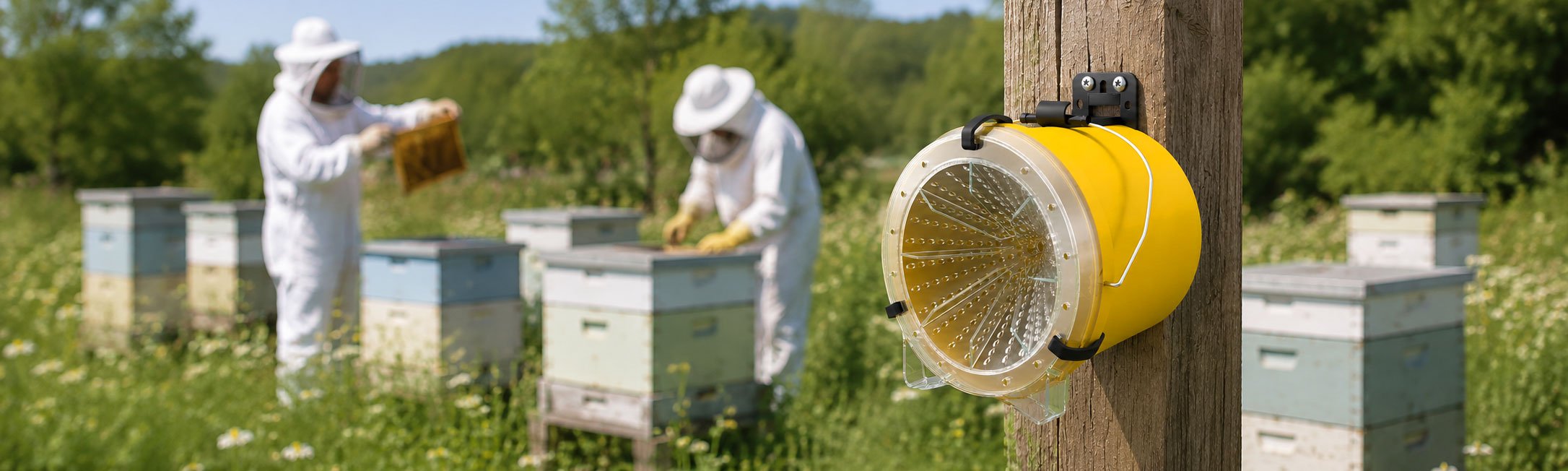
Trap-X® Wasp deployed at an apiary
Balancing hive protection with biodiversity
That protection can sit alongside a balanced view of wasps. They help control other insects and contribute to pollination. A wasp visiting flowers and a sustained attack on a small colony call for different responses.
So, has 2026 been tougher than 2025? For some apiaries, it may have been. Across the UK and continental Europe, the evidence reviewed does not establish a consistent increase in wasp pressure or losses caused by wasps.
The most useful comparison starts with your own records. Note when attempted entry begins, which colonies attract attention and what changes after you intervene. Those observations will tell you more about protecting your bees than any headline about a “bad wasp year”.