
The Yellow-Legged Hornet Reaches New Zealand’s Radar!
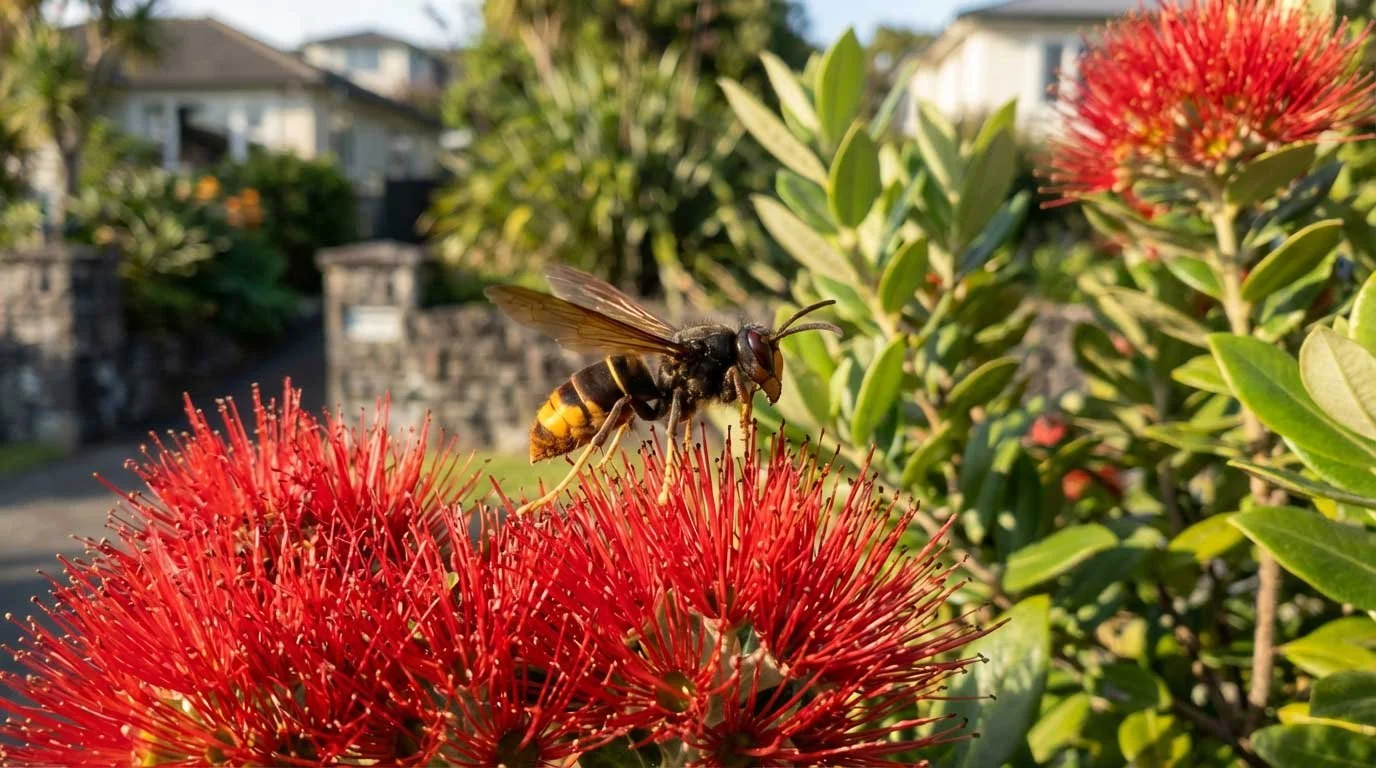
Yellow-legged Asian hornet by Pohutukawa bush
New Zealand has a long history of keeping unwanted species out. That’s why recent detections of the yellow-legged hornet have caught the attention of biosecurity teams and beekeepers alike. While the insect has not established itself in the wild, its appearance at the border is a reminder of how quickly invasive species can travel.
What is the yellow-legged hornet?
The yellow-legged hornet, also known as Vespa velutina, is native to parts of Southeast Asia. Over the past two decades, it has spread aggressively through Europe after arriving accidentally in shipping containers.
It’s slightly smaller than the European hornet, with a dark body, an orange face, and distinctive yellow legs. The problem isn’t just how it looks. It’s what it does.
This hornet is a highly efficient predator of honeybees. A small group can hover outside a hive and pick off bees one by one, weakening colonies and sometimes destroying them entirely.
How did it reach New Zealand?
New Zealand’s Ministry for Primary Industries has confirmed several interceptions around Auckland, most likely linked to international shipping. Hornets can hitch rides in cargo, timber, vehicles, or shipping containers.
So far, every known detection has been dealt with quickly. There is no evidence of an established population anywhere in the country. That distinction matters. Early detection is the difference between a manageable response and a long-term ecological problem.
Why this species matters so much
If the yellow-legged hornet were to establish itself, the risks would be serious:
Losses for beekeepers due to hive predation
Reduced pollination affecting crops and native plants
Increased pressure on native insects with no natural defences
Public safety concerns, as hornets aggressively defend their nests
Countries in Europe are still struggling to control the species years after its arrival. New Zealand wants to avoid that outcome altogether.
Where Trap-X fits in
One of the tools gaining attention is the Apitura® Trap‑X® and Bait Pod™ trapping system, designed to attract and capture invasive Yellow-legged hornets.
Trap-X uses species-specific lures that can be deployed in high-risk areas such as ports, freight yards, orchards, and near beehives. The idea is straightforward: detect problem insects early, reduce their numbers quickly, and provide clear evidence of what species are present.
For biosecurity teams and beekeepers, traps like these offer two key benefits:
Early warning – catching a single hornet can trigger a rapid response before a nest is established
Ongoing monitoring – traps help confirm whether an area remains pest-free over time
While traps alone won’t solve an invasion, they are a practical part of a wider surveillance and response system.
What’s being done now
Biosecurity responses include:
Tracing freight linked to detections
Increased surveillance around ports and industrial areas
Rapid destruction of any nests that are found
Use of monitoring tools such Trap-X® and the Bait Pod™
Public awareness and reporting campaigns
The goal is simple: stop establishment before it begins.
What to look out for
The yellow-legged hornet can be confused with wasps already found in New Zealand, so identification matters. Key features include:
Dark brown or black body
Bright yellow lower legs
Orange or yellow-orange face
Large paper nests, often high in trees or buildings
Anyone who believes they have seen one should not try to kill or capture it. Instead, it should be reported to biosecurity authorities so trained teams can respond.