
Yellow-Legged Asian Hornets in Jersey and the UK: The 2026 Spring Season
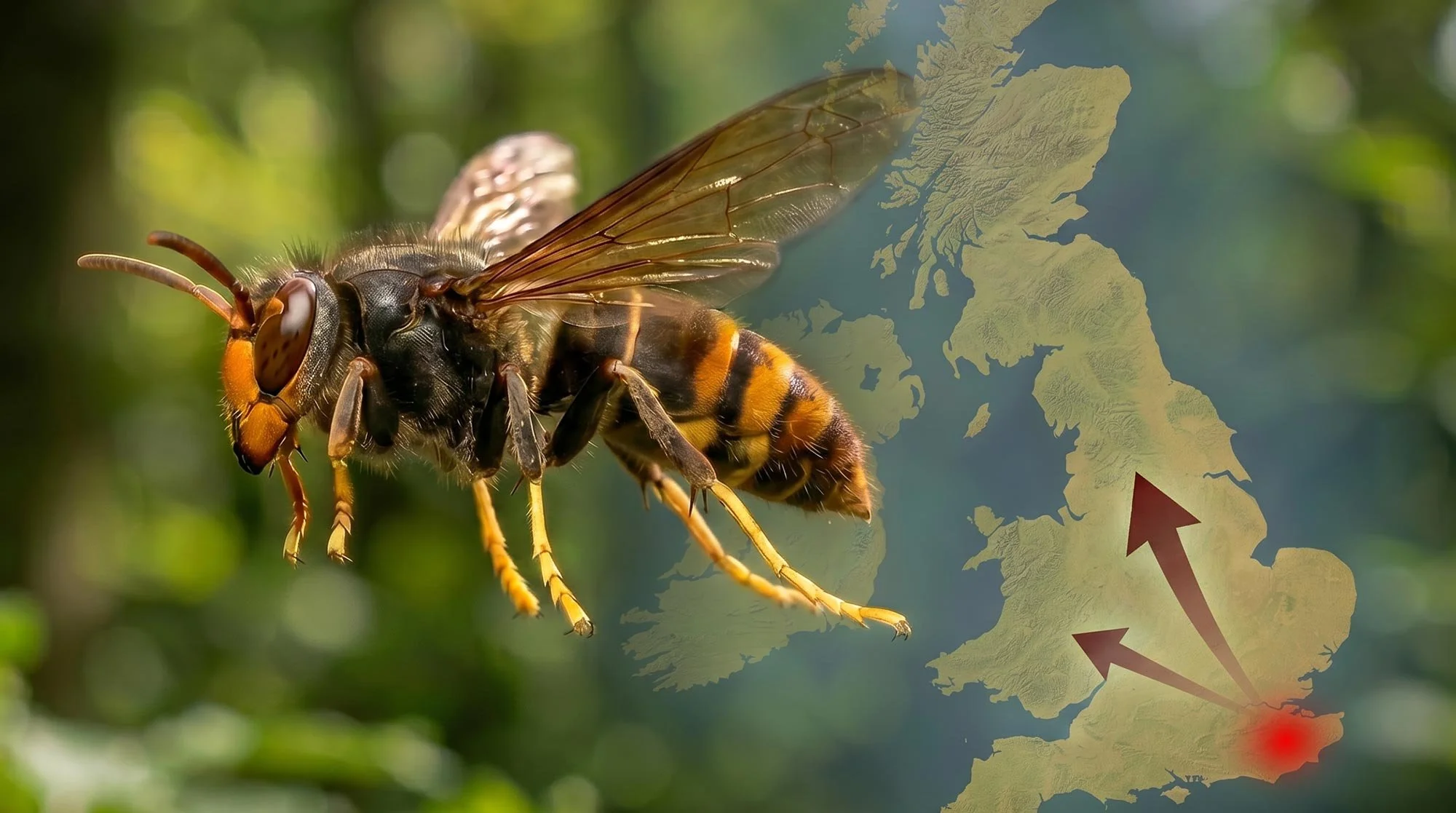
The 2026 season has already highlighted the continuing spread and growing challenge posed by the Yellow-legged Asian hornet, Vespa velutina, across both Jersey and the wider UK. Following record activity in 2025, this year began with heightened concern among beekeepers, environmental groups and authorities, particularly after evidence confirmed that the species had successfully overwintered and bred in parts of the UK for the first time.
For Jersey, which has spent many years on the frontline of the Asian hornet invasion, 2026 has once again demonstrated how quickly populations can develop when conditions are favourable. Early season queen activity was reported sooner than many expected, with monitoring groups and local volunteers already locating and tracking developing nests during spring. Reports from Jersey have included confirmed worker hornets emerging from hidden nests early in the season, showing that colonies were becoming established rapidly.
Across the UK mainland, vigilance remains high. The National Bee Unit’s 2026 rolling updates have already documented confirmed sightings in several counties, including Nottinghamshire, Hampshire and other areas well beyond the traditional southern coastal hotspots associated with earlier incursions.
The spread northward continues to concern both beekeepers and scientists. Recent years have seen sightings move progressively further inland and northward, with confirmed activity previously recorded in areas such as Yorkshire and Wales. Following the exceptionally high number of confirmed nests destroyed in 2025, authorities are warning that 2026 could become another significant year if weather conditions remain favourable for colony development.
Why 2026 Matters
The importance of the 2026 season lies not simply in the number of sightings, but in what they represent. Previous incursions into the UK were often believed to be isolated arrivals linked to imported goods or weather-assisted crossings from mainland Europe. However, evidence gathered during 2025 suggested that at least some hornets were successfully breeding and overwintering within the UK itself.
That changes the picture significantly
An overwintering queen can establish a new primary nest in spring, eventually producing thousands of hornets by late summer and autumn. A mature colony can place immense pressure on local pollinator populations, particularly honey bees, which are targeted during “hawking” behaviour outside hive entrances. Hornets capture returning foragers in flight, gradually weakening colonies and causing considerable stress within the hive.
Experts also continue to stress that Yellow-legged Asian hornets are not solely a beekeeping issue. Their diet includes a very wide range of insects, including hoverflies, wasps and other important pollinators.
Jersey Continues to Lead the Fight
Jersey remains one of the most experienced regions in the British Isles when it comes to Asian hornet management. Years of coordinated monitoring, public awareness and rapid nest destruction have created an effective response model that many other regions now look towards.
Public reporting remains one of the strongest tools available. Residents are encouraged to report sightings quickly using official reporting systems and mobile apps, helping authorities track activity and locate nests before colonies become fully established.
The island’s experience has repeatedly shown that early intervention is critical. Small spring nests are far easier to destroy than large secondary nests hidden high in trees later in the season.
Spring 2026: Clear Evidence of Northward and Inland Spread
One of the most important developments so far in 2026 is the continued spread beyond traditional southern hotspots.
Sightings and confirmed activity have been reported in areas including:
Hampshire
Nottinghamshire
Wrexham
Doncaster
This pattern reflects a broader and well-established trend: the hornet is moving inland and further north, not just arriving along the southern coast.
For beekeepers and monitoring groups, this is a key signal. It indicates that the species is no longer confined geographically and that vigilance is now required across a much wider area of the UK.
Beekeepers on Alert
Beekeeping associations throughout the UK have urged members to increase monitoring efforts throughout spring and summer 2026. The British Beekeepers Association has encouraged vigilance following the unusually high activity seen in previous seasons and has continued to promote identification guidance and reporting tools.
Many beekeepers are now incorporating regular hornet monitoring into routine apiary management.
This includes:
Watching for hawking behaviour outside hive entrances
Monitoring bait stations and traps responsibly
Avoiding attractants that increase bycatch of beneficial insects
Reporting suspected sightings immediately
Supporting local tracking and nest location efforts
Importantly, experts continue to emphasise that monitoring and rapid reporting remain far more effective than indiscriminate trapping.
Looking Ahead
As the 2026 season develops, much will depend on weather conditions during late spring and summer. Warm, stable weather can significantly accelerate colony growth and reproductive success, potentially leading to increased sightings later in the year.
What is already clear, however, is that the Yellow-legged Asian hornet is no longer viewed as an occasional visitor. Jersey’s long-running experience, combined with increasing UK mainland sightings, suggests that long-term vigilance and coordinated monitoring will remain essential for years to come.
For beekeepers, gardeners and the wider public alike, awareness remains one of the most important defences. Early identification, rapid reporting and responsible monitoring continue to provide the best opportunity to slow the spread of this invasive predator and help protect pollinators across Jersey and the UK.